


Worksheet 3 - Overclocking
Overclocking appears to be a way of increasing the performance of your microprocessor, motherboard, video card and other devices. This process relies on pushing these beyond their default settings. At the present time, overclocking microprocessors seems to be the most popular.
What does the microprocessor overclocking consist in?
Every processor contains a device called
clock.
This clock sets the rate
at which the processor performs the instructions it receives. Therefore raising the clock speed will
increase
the number of instructions carried out
per second. Once you have increased the clock speed by changing a jumper
 on the
motherboard,
you've overclocked your processor. In the case of old computers (486s), by changing the clock speed
you have also changed the memory bus speed. In other words, the CPU and memory bus used to work at the same rate
before the DX2 processor, which enabled the CPU to run at 50 MHz while allowing the memory bus to work at 25 MHz, was
put into operation.
This was achieved by using clock multiplication
(in this case the multiplier was 2).
on the
motherboard,
you've overclocked your processor. In the case of old computers (486s), by changing the clock speed
you have also changed the memory bus speed. In other words, the CPU and memory bus used to work at the same rate
before the DX2 processor, which enabled the CPU to run at 50 MHz while allowing the memory bus to work at 25 MHz, was
put into operation.
This was achieved by using clock multiplication
(in this case the multiplier was 2).
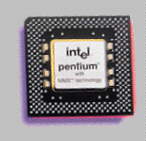 At the present time the clock multiplication
offers a much greater choice. There are usually several multiplier
values, which can be changed by means of multiplier jumpers, as well as several memory
bus
speed values that can be changed on the motherboard.
It is recommended that users change the memory bus speed first for this changes the CPU efficiency
as well (even without increasing the CPU multiplier). That is to say, the CPU (if you raise
the bus rate) will not have to wait for the bus
to transfer
data. Sometimes when you increase
the CPU multiplier only, the overall
performance
will not rise
dramatically because the CPU will be delayed
by the bus.
At the present time the clock multiplication
offers a much greater choice. There are usually several multiplier
values, which can be changed by means of multiplier jumpers, as well as several memory
bus
speed values that can be changed on the motherboard.
It is recommended that users change the memory bus speed first for this changes the CPU efficiency
as well (even without increasing the CPU multiplier). That is to say, the CPU (if you raise
the bus rate) will not have to wait for the bus
to transfer
data. Sometimes when you increase
the CPU multiplier only, the overall
performance
will not rise
dramatically because the CPU will be delayed
by the bus.
What the one who wants to overclock their processor should be aware of is the fact that any overclocking results in the production of excess heat. Hence you shouldn't tamper with your CPU by trying to increase its speed unless you use adequate cooling, because otherwise you expose your CPU to the danger of being melted. Another important thing to mention is that these days some processors have fixed multipliers which cannot be changed. In this case the only value to modify is the bus speed.
NOTICE: The passage supplied above is intended solely for language learning purposes. Be aware that whenever you follow any of the information it contains, you do so at your own risk!!! Remember that overclocking always means changing default settings and may void the warranty of your device in the event of damage!!! By no means am I to be held responsible for any damage resulting from putting the above mentioned information into practice. (Martin Dvořák)
If you want to practice your listening and pronunciation, listen to the text using the audio player below.
Notice the British accent of the speaker!